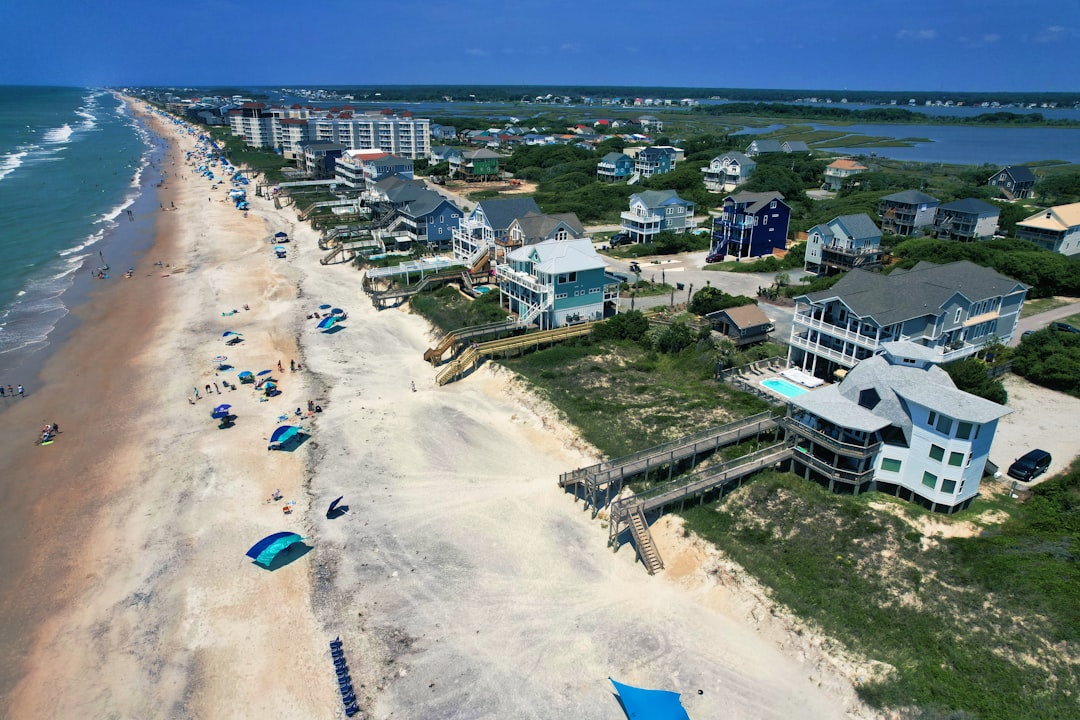
Last month, NOAA gave formal approval to a change in North Carolina’s federally recognized coastal management program that directly affects waterfront property owners along the Crystal Coast. According to Coastal Review’s reporting from August 2026, the National Oceanic and Atmospheric Administration approved the state’s request to no longer require a CAMA permit to fix or rebuild certain waterfront structures — specifically docks, piers, and walkways — damaged by natural forces, fire, or ordinary wear. For Emerald Isle homeowners watching a storm-battered pier list toward the sound, or Beaufort property owners dealing with decade-old dock planking that’s finally given out, this matters in very practical terms.
The path to that approval was neither short nor informal. NC DEQ’s Division of Coastal Management submitted the request on January 9, 2025. NOAA issued its approval in late August 2026 — roughly nineteen months later. The change runs through the state’s federally approved Coastal Area Management Program, the same framework that CAMA rules and regulations fall under.
Where the Rule Change Came From
The Coastal Resources Commission — the body that sets development rules for North Carolina’s 20 coastal counties — undertook this rulemaking at the direction of the NC General Assembly during its 2023-24 session. Coastal Review’s reporting is specific on this point: state lawmakers directed the CRC to begin the process of dropping the CAMA permit requirement for certain repair and rebuild situations.
That legislative push is the reason the DEQ filing landed in January 2025. Once the state submitted its program amendment request, NOAA had to review it against federal coastal management standards before the change could take effect within the federally approved program. Both levels of government — state and federal — had to sign off.
What the Change Actually Covers (and What It Doesn’t)
The exemption has clear boundaries. According to Coastal Review, it applies to the repair or rebuilding of docks, piers, and walkways damaged by natural forces, fire, or wear — provided that:
- Modifications are minor
- The structures meet specific size limits
Neither of those qualifications is defined in the Coastal Review article itself, which means the precise definition of “minor modification” and the numeric size thresholds live in the formal rulemaking language. Before assuming your project qualifies, you need the actual rule text — not a summary of it. The right place to pull that language is the DEQ Public Notices page, which Coastal Review specifically identifies as where materials and documents related to this decision can be examined.
Several categories of work are almost certainly still outside this exemption. Any project that expands the footprint of a structure beyond what existed before damage, changes the structure’s use, or adds a new structure rather than repairing an existing one would be a different analysis. If you’re rebuilding a dock and adding a boat lift that wasn’t there before, confirm with DCM whether the lift addition triggers its own permit requirement — that’s the kind of hybrid project where one portion may qualify for the exemption and another portion doesn’t.
For context on what a full CAMA permit process looks like when one is required, the site’s guide on getting a CAMA permit for Emerald Isle docks and bulkheads walks through the standard steps.
What This Means on the Ground for Crystal Coast Waterfront Owners
Carteret County’s sound-side properties — the canal-front homes in Emerald Isle, the dock-heavy parcels along Bogue Sound, Beaufort’s Taylor Creek frontage — are exactly the properties where this change is most relevant. Storm seasons routinely knock out dock decking, damage pilings, and take out walkway sections. Before this change, repairs and rebuilds that met certain thresholds required navigating the CAMA permit process even when the underlying structure wasn’t being meaningfully changed.
A removed permit requirement is not a removed inspection process or a removed obligation to comply with local building codes. Carteret County and individual municipalities still have their own building permit requirements for structural work. A repair that’s exempt from CAMA permitting may still require a county building permit — verify that with the county’s building inspections office before work begins. The two regulatory systems operate in parallel; an exemption in one doesn’t automatically translate to an exemption in the other.
Flood zone status is also worth keeping in mind here. A dock repair on a property in a high-risk FEMA flood zone may trigger questions for your insurer, particularly if the work is substantial enough to be characterized as reconstruction. If you’re unsure how your policy defines “repair” versus “reconstruction” for coverage and claims purposes, that conversation with your insurer should happen before you hire a contractor — not after the work is complete. The guide on what Atlantic Beach homeowners should ask before assuming a policy covers wind covers the general framework of how coastal policies define their own terms, which applies to soundside properties as well.
The Second Item NOAA Approved
The Coastal Review article notes a second element to NOAA’s approval: authorizing a measurement line for dune-building and beach-planting projects in municipalities with permitted terminal groin construction. This, too, came from the same 2023-24 session law direction. We’re flagging it here because waterfront owners near terminal groin areas — or municipalities actively considering terminal groins — should know the broader approval covered this piece as well.
Terminal groins remain a separate and active regulatory topic on the Crystal Coast. If you want the fuller picture on how shoreline engineering projects affect waterfront access and property, the guide on the Snows Cut shoreline stabilization project provides useful context on how these larger stabilization decisions play out for property owners.
Your Immediate Next Step
Pull the actual rule language before you hire anyone. The DEQ Public Notices page — named in Coastal Review’s reporting as the official location for materials related to this decision — is the starting point. What you’re looking for is the specific definition of “minor modification” and the size limits that determine whether a given repair project falls inside or outside the exemption.
Once you have that language in hand: cross-reference it against your project scope in writing, confirm with Carteret County whether a county building permit is still required for your specific repair, and get clarity from your insurer if the dollar value of the work is significant. Regulatory exemptions simplify one part of the process — they don’t collapse all the parts into one.